
4.4.2 Active restoration
Active restoration techniques manipulate the demography and movement of seabirds, requiring an understanding of species-specific behaviour and population dynamics to be successful. Active restoration projects typically take two forms: some rely on social attraction (using speakers and decoys to attract birds to the protected area) whilst others rely on social attraction coupled with translocation (actively moving birds from one a source colony to the protected area). Both methods can accelerate the recovery or recolonisation process or can be used where passive restoration has failed to regenerate populations. Active restoration for burrow nesting species typically also includes the creation of artificial burrows (which can kickstart breeding by relieving birds from the burden of having to dig their own burrows).
Due to the factors influencing seabird population recovery and recolonisation of newly available habitat, deciding whether to use social attraction only or coupling it with translocation relies on a consideration of a number of factors, including whether the target species is currently breeding on site but in limited numbers, whether it is breeding somewhere nearby, or whether the site is on a flyway of the target species. These questions will allow project managers to decide whether social attraction on its own has a chance of success or whether translocation from source colonies much farther away is required.
As active restoration has consequences to source populations (these projects are drawing birds in from other breeding colonies), they need to be carefully and meticulously planned. They can also work in tandem with each other. For example, prior to embarking on translocation actions, some projects may rely on several years of social attraction first to see if that works. This is a good approach to try when initiating new projects, as it may be that social attraction is all you actually need to do. Remember that translocation projects require highly skilled and trained staff, significantly more funds and logistics, and involves the active physical removal of chicks from other breeding colonies, with meticulously planned feeding programmes. As these source colonies may already be managed and have high fledging success rates because of this, there needs to be a clearly defined need and a high likelihood of success of the project prior to its initiation – particularly when dealing with endangered seabird species.
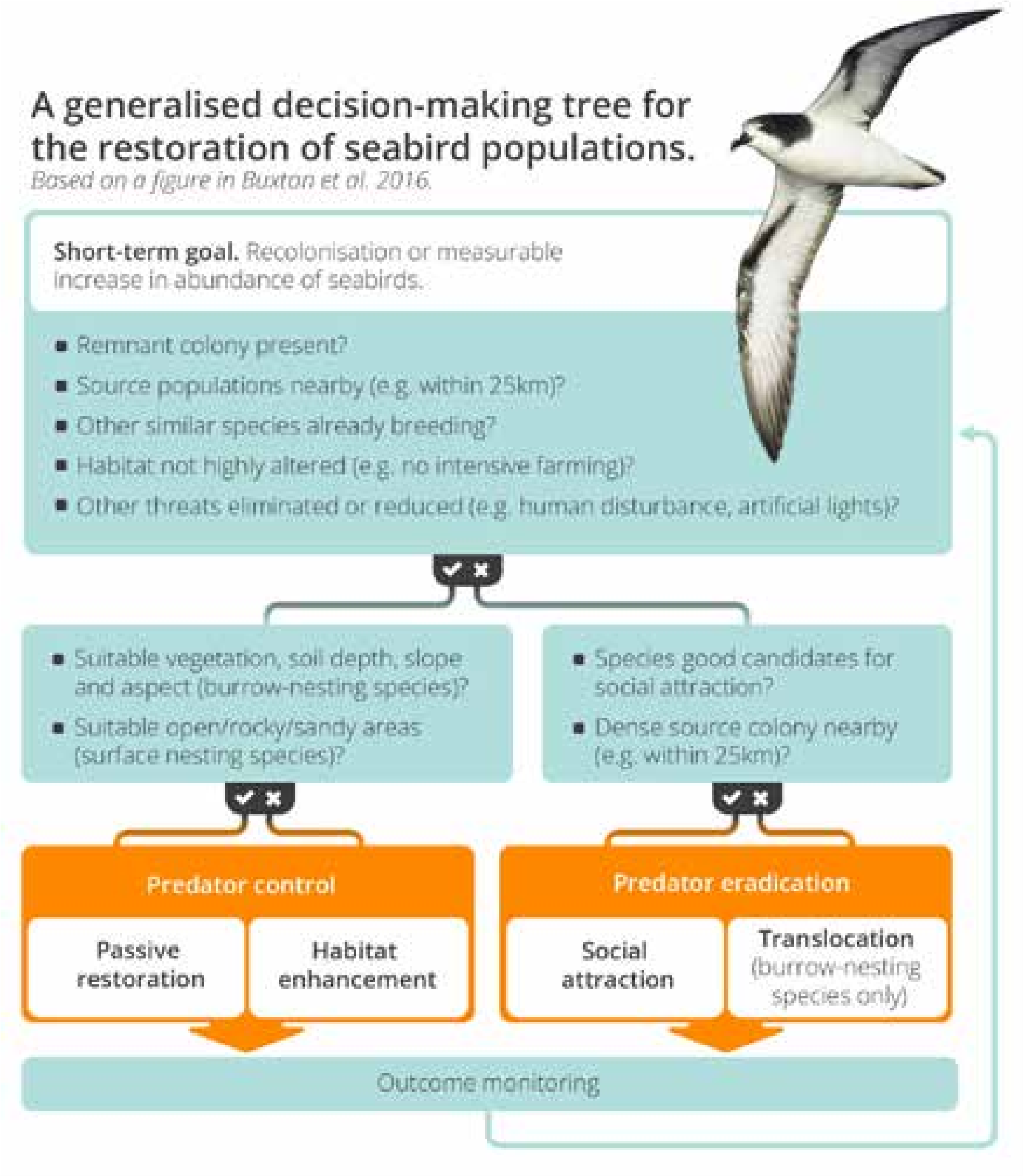
Figure 131. A generalised decision-making tree for restoring seabird populations.107

Figures 132-135. Examples of seabird restoration methods, decoys, nest boxes with playback, predator-proof fencing.