
2.1.2 Community surveys
There is a wealth of knowledge about seabirds to be found at the grassroots level within the communities of the Pacific, especially among people who are living in close proximity to the birds you are interested in. Do not underestimate the power of traditional ecological knowledge (TEK); people who have lived in the area you are focussing on for many generations will likely have a deep understanding of the birds, where they live, their seasons, and their ecology. Therefore, community surveys are often a good place to start when assessing an area for the first time.
Birds nesting in trees (such as Black Noddies and Red-footed Boobies) will be well known, as will those birds seen catching fish in lagoons or over the open sea foraging alongside tuna schools. People will see and hear birds calling when flying over villages, both during the daytime, and at night. They might also be familiar with birds they find grounded, such as fledgling petrels and shearwaters attracted to lights of villages and towns. There is the potential to gather data on seabirds and where they might be nesting by visiting communities, through formal meetings and following local protocols, by visiting schools, or talking to people living in isolated places. Social media and printing posters and fliers can also be used to get people to report data on seabirds. If someone has knowledge of where birds are nesting or roosting, then it is the location which is important, so a follow up plan can be made, ideally involving that person as a guide.
Method
Community surveys typically involve in-person meetings with individuals or groups to assess the prevalence of species, distribution, aspects of their breeding and foraging ecology, rarity, whether or not people are utilising them (e.g., directly for food, or indirectly to find fish) and any potential threats they may be facing.
Resources that can be used to help identify seabirds will be required and will need to include accurate illustrations of seabirds from field guides and photographs, with images as hard copy, as posters, on a tablet, or via PowerPoint projected onto a big screen at meetings. Training for the people who will conduct these surveys will be essential.
This can be done through workshops, or through mentoring, as well as accompanying an experienced person during community visits. Surveys should be conducted in the language most familiar to the community to be surveyed. If external experts are used, then having at least one person in the survey team fluent in the native language is also essential.
There may also be important cultural protocols for how the surveys should be conducted within communities including gaining permission from the village chief and these would need to be strictly followed. Free, prior and informed consent processes should also be followed.
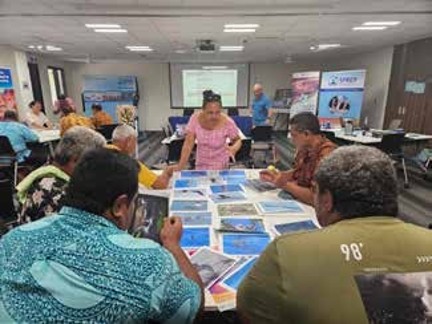
Figure 31. Knowledge café on seabirds for community groups across Samoa held at SPREP campus, Apia. Photo: SPREP.
Lastly, be aware of potential pitfalls for conducting community surveys. For example, people being interviewed may not be able to tell subtle differences between similar species (resulting in misidentification) or may feel compelled to say they have seen a species because they feel under pressure during the interview process. With this in mind, it is important to include photos or illustrations of species not found in the region as a way of testing knowledge and identification skills, and to remember that just because someone says they have seen a particular species in the region it may not actually be the case. Furthermore, raising the profile of seabirds could result in unwelcome responses, such as an increase in harvesting (especially if in the process of interviewing, the interviewer discusses novel capture techniques). That said, these surveys and conversations can bring to light the extent of harvesting by communities, a topic that needs to be handled carefully by people outside those cultures.
When to use
A first step is to assess the level of awareness of people living in the area. This could be accomplished by undertaking community surveys, which could take place at any time of the year (there would be no need to consider breeding seasons for example at this early stage). Using this feedback, combined with knowledge of when the species is breeding in other areas, you can then determine the best periods to conduct more comprehensive field-based surveys using methods outlined below, provided there are people available and there’s a budget to support the work.

Figures 32 & 33. Posters produced in Samoa to encourage people within the communities to report on seabird sightings, especially grounded petrels and shearwaters, birds attracted to lights. Posters: Samoa Conservation Society/ Samoa Ministry of Natural Resources & Environment.
Data collection
All survey results, i.e., records of when/ where birds have seen, should be gathered into a spreadsheet, date, time of day/night, location of what was seen or heard, the name of the person who made the report, contact details, the community’s name, and comments on any protocols governing use of the information. Data collected from the communities can lead to follow-up field-based surveys, using any one of the methods covered in the next sections of this manual.