
4.3 Better marine conservation
Jonathan Handley, BirdLife International

Figure 129. Banner graphic supplied by BirdLife International.
The Marine Megafauna Conservation Toolkit is an open-access online toolkit which facilitates the identification of important sites for marine megafauna and pathways to advocate for their conservation.
A primary goal of the toolkit is to facilitate the application of methods to identify sites that meet Key Biodiversity Area (KBA) criteria, including from tracking data, and relevant implementation of conservation actions to support marine megafauna achieve or maintain a favourable conservation status. Key Biodiversity Areas are sites that contribute significantly to the global persistence of biodiversity and are a leading conservation planning tool recognised in multilateral environmental agreements.
Through three main components, the toolkit:
- Helps users identify critical sites for species, including supporting users to turn complex animal tracking data into outputs useful for decision-makers,
- Helps users in identifying effective conservation interventions through case studies curated by the global Conservation Evidence Team, and
- Helps users understand which mechanisms can support decision-makers to act by guiding users through the policy and advocacy opportunities for site-based conservation. For example, where decision-makers require information on important sites for spatial planning, the toolkit will enable this. Additionally, the toolkit enables understanding of what actions are required to conserve important sites within spatial planning exercises. The toolkit therefore facilitates the urgent need to scale solutions for nature conservation.
Whether focused on an individual site or networks of sites from national, regional, to global levels, the toolkit serves to scale solutions for the conservation of marine megafauna.
Ultimately, the toolkit is a key facilitating mechanism that can enable individuals or groups to better deliver outputs and information required for achieving global commitments such as those of the Kunming-Montreal Global Biodiversity Framework, UN Sustainable Development Goals and the Framework for Nature Conservation and Protected Areas in the Pacific Islands Region 2021-2025.
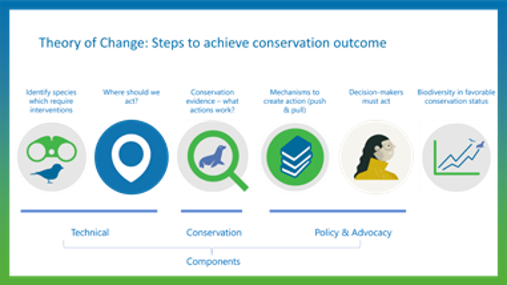
Figure 130. Graphic providing an overview of the Toolkit supplied by BirdLife International.
Toolkit in the context of this manual: An essential component for identifying sites that could qualify as Key Biodiversity Areas is having information on species abundance. Therefore, by using the manual to understand how to determine abundance estimates for seabirds, users will be well positioned to take this data and apply methods outlined in the toolkit to progress conservation actions in the Pacific.