
2.1.7 Thermal imaging
Probably not relevant for Palau at this point.
As well as night vision (discussed in Section 2.1.3) and the use of trail cameras (Section 2.1.6), the advent of thermal imaging has also provided exciting opportunities for surveys of nocturnal seabird species. This survey method follows on from the use of infrared cameras set up in fixed locations. Trail cameras generally use short wavelength infrared light to illuminate an area of interest. Some of the infrared energy is reflected back to a camera and interpreted to generate an image. Conversely, thermal imaging systems use mid- or long-wavelength infrared energy. Thermal imagers are passive and can only sense differences in heat. These heat signatures are then displayed on a monitor and are usually portrayed as black (cold) and white (hot). However, many devices have the option of allowing you to change the colour palette, so make sure you practice with different options to see what works best for your eyes. Some devices also allow you to record your survey sessions, which can be very useful in busy survey sites.
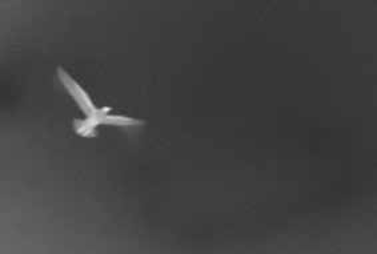
Figure 40. Tropical Shearwater overflying suburban area of Apia, Samoa. Image: Chris Gaskin
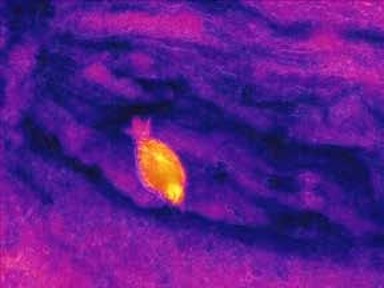
Figure 41. Thermal imaging from a drone showing a Wedge-tailed Shearwater chick. Image: André Raine
Method
Thermal imaging is very useful for detecting overflying birds, especially when looking for the potential flyways and flight behaviour that could lead to finding otherwise-unknown colonies.
To detect birds in flight, the method involves finding a fixed vantage point on the shore for birds coming from the sea, or a clear area on a ridge or valley floor further inland allowing clear views of potential flight paths. There are two main ways you can use thermal cameras for surveys:
- Follow the target and record its direction and any changes in flight behaviour. This is useful for working out where birds are going or trying to locate nest sites. Multiple flight paths in the same direction, and circling behaviour, especially linking with other birds, could indicate the location of a breeding site. In forested areas, once birds enter the forest, they can be extremely difficult to locate at night. With thermal imaging it becomes possible to follow a bird dropping through the canopy, walking across the forest floor and if it disappears, for the observer to go over to the location to check for a burrow entrance.
- Keeping your thermal camera fixed on one location and counting the targets moving past your field of view. A tripod would be helpful in this situation. This is useful if you are trying to obtain measures of abundance of birds flying above a colony, conducting standardised counts between survey areas to compare sites, or to obtain seasonal differences in colony attendance
While thermal imaging can detect birds at a far greater range than other night vision technologies, identifying them to species becomes increasingly difficult with distance. This is particularly true if there are multiple target seabird species, or if there is an abundance of other nocturnal species in the area (such as flying foxes over tropical forests or other nocturnal bird species such as owls). With this in mind, familiarise yourself with your target species via photographs, or videos, to get a clear idea of their shape and behaviour in the air. For example, look at the shape of their wings and bodies and what their flight patterns are like (gliding or rapid wing beats, direct or meandering flight) Make sure you also listen for calls to help confirm the identity of birds viewed through the scope or camera.
One thing to bear in mind is that heat given off by the ground, especially rocks, and also vegetation, can reduce the effectiveness of thermal imaging. However, with altitude and cooler night-time temperatures, the temperature gradient between the two (target and background) increases, allowing the birds to stand out enough to be detected. Finally, using thermal imaging cameras will affect your night vision, and it will take a few minutes for your eyes to readjust to normal.
It is possible to detect using thermal imaging burrow occupancy at higher altitudes where it is cooler, and with lower night-time temperatures.