
Part 3: Measurement metrics & monitoring
This section presents the methods required to gather data from the seabirds themselves, starting with burrow monitoring, then bird handling, taking measurements, banding, and samples, and checking breeding status. These hands-on methods can lead to a variety of research studies; mark recapture, measuring reproductive (or breeding) success, diet , monitoring stress, investigating for plastics ingestion and contaminants. The section rounds off with monitoring cyclone impacts on seabird populations and measuring the success (or otherwise) of predator control measures. Once again, choosing the appropriate method will depend on what your research project and monitoring programme is aiming to achieve.
The methods outlined in this section require research projects to have the necessary permitting in place, and that the participants handling birds have been trained for the tasks to be undertaken.
Sections in Part 3
3.2 Handling birds for research or management actions
3.4 Determining breeding status
3.8 Monitoring stress - and introduction to ecophysiology
3.9 Measuring plastics accumulation
3.11 Seabird-transported nutrient monitoring
3.12 Monitoring cyclone impacts on seabird populations
3.13 Monitoring success (or otherwise) of predator pest control measures
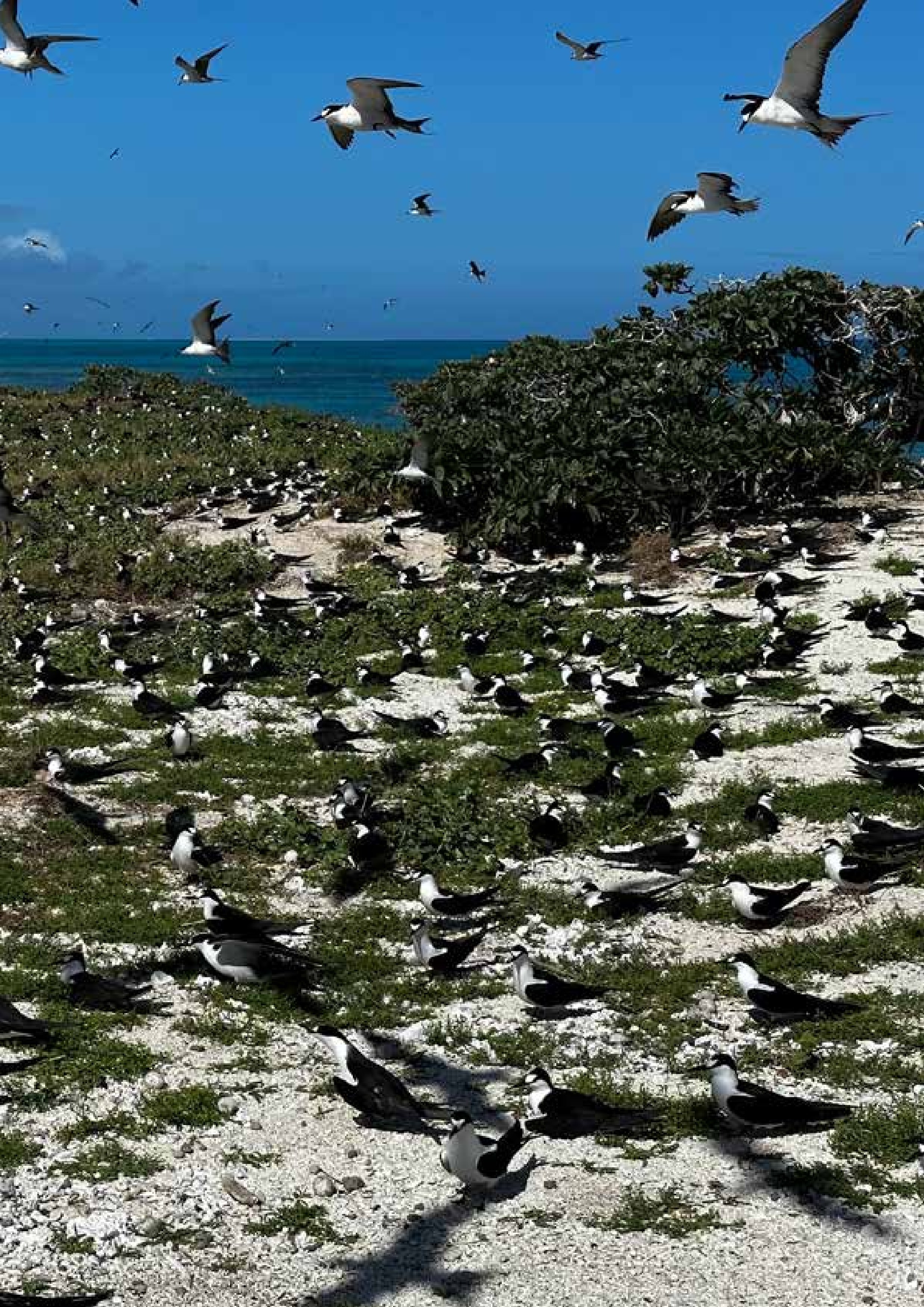
Sooty Tern colony, Chesterfield Reef, New Caledonia. Photo: Mathieu Mathivet, Birds Conservation New Caledonia.